Stricture Dilatation
Stricture Dilatation is an endoscopic procedure used to widen a narrowed section (stricture) of the gastrointestinal tract. Strictures can occur in the esophagus, stomach, or intestines due to inflammation, scarring, chronic acid reflux, surgery, or certain digestive diseases.
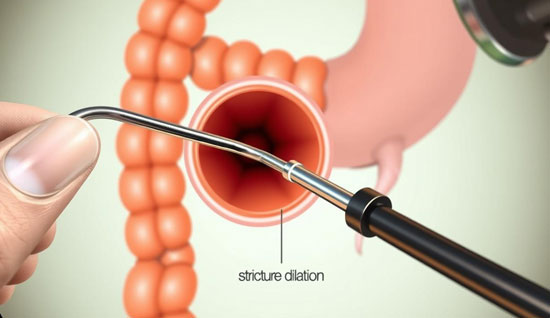
This procedure helps restore the normal passage of food and liquids by gently stretching the narrowed area using specialized medical instruments. Stricture dilatation is commonly performed during an endoscopy and is considered a safe and effective treatment for relieving symptoms caused by narrowing of the digestive tract.
By widening the affected area, this procedure can significantly improve swallowing and digestive function.
Why Stricture Dilatation is Performed
Stricture dilatation is recommended when narrowing of the digestive tract interferes with normal swallowing or digestion.
- Treatment of esophageal narrowing
- Relief from difficulty in swallowing
- Management of strictures caused by chronic acid reflux
- Treatment of narrowing due to inflammation or scarring
- Improvement of food passage through the digestive tract
Conditions That May Cause Strictures
Several gastrointestinal conditions can lead to the formation of strictures.
- Chronic acid reflux (GERD)
- Esophageal inflammation
- Scarring after surgery
- Radiation therapy effects
- Crohn’s disease affecting the digestive tract
What to Expect During the Procedure
Stricture dilatation is usually performed during an endoscopic procedure and may take around 20 to 30 minutes.
- The patient may need to fast before the procedure.
- Mild sedation is given for comfort.
- An endoscope is inserted to locate the narrowed area.
- Special dilators or balloons are used to gently widen the stricture.
- The passage is gradually expanded to allow easier swallowing or digestion.
Most patients can return home the same day after a short observation period.
Benefits of Stricture Dilatation
This procedure offers several advantages in the treatment of digestive tract narrowing.
- Improves swallowing and food passage
- Minimally invasive treatment
- Provides relief from obstructive symptoms
- Reduces the need for surgical intervention
- Short recovery time
When to Seek Medical Advice
Medical evaluation is recommended if symptoms suggest narrowing of the digestive tract.
- Difficulty swallowing food or liquids
- Food getting stuck while swallowing
- Unexplained chest discomfort during swallowing
- Persistent vomiting after eating
- Unintentional weight loss
Early diagnosis and treatment of strictures can help restore normal digestive function and prevent further complications.