Colonoscopy
Colonoscopy is a diagnostic procedure used to examine the inner lining of the large intestine (colon) and rectum. It helps identify various digestive conditions affecting the lower gastrointestinal tract and allows early detection of abnormalities.
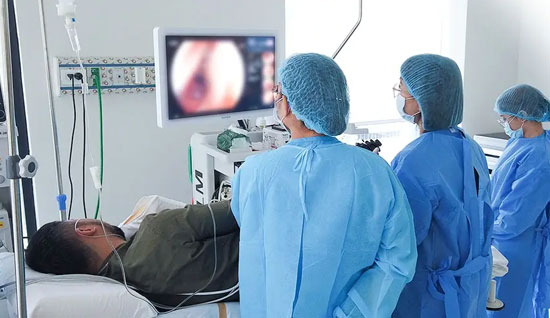
The procedure is performed using a long, flexible tube called a colonoscope, which has a small camera and light attached to its tip. The camera transmits images to a monitor, allowing detailed examination of the colon to detect inflammation, bleeding, polyps, ulcers, or other abnormalities.
Colonoscopy is widely used for both diagnosis and treatment. In many cases, doctors can remove polyps, control bleeding, or take tissue samples (biopsy) during the same procedure.
Why Colonoscopy is Performed
This procedure is recommended when patients experience symptoms related to the lower digestive tract or when screening for colon diseases is required.
- Blood in stools
- Persistent abdominal pain
- Chronic diarrhea or constipation
- Unexplained changes in bowel habits
- Unexplained weight loss
- Screening for colorectal cancer
- Evaluation of inflammatory bowel disease
Conditions That Can Be Diagnosed
Colonoscopy helps detect several conditions affecting the colon and rectum.
- Colon polyps
- Colorectal cancer
- Ulcerative colitis
- Crohn’s disease affecting the colon
- Intestinal inflammation
- Sources of gastrointestinal bleeding
- Diverticular disease
What to Expect During the Procedure
Colonoscopy is usually performed as a day-care procedure and typically takes about 20 to 40 minutes.
- The patient may be advised to follow a special diet and bowel preparation before the procedure.
- Mild sedation may be given for comfort.
- A colonoscope is gently inserted through the rectum into the colon.
- The camera provides detailed images of the colon lining.
- If necessary, polyps can be removed or tissue samples can be collected for biopsy.
After the procedure, patients are usually observed for a short period and can return home the same day.
Benefits of Colonoscopy
Colonoscopy offers several important benefits for diagnosing and preventing serious digestive conditions.
- Provides a clear view of the entire colon
- Helps detect colon diseases at an early stage
- Allows removal of polyps that may develop into cancer
- Enables biopsy for accurate diagnosis
- Helps identify the source of intestinal bleeding
When to Seek Medical Advice
Medical consultation is recommended if you experience symptoms related to the lower digestive tract.
- Blood in stools
- Persistent abdominal discomfort
- Changes in bowel habits
- Chronic diarrhea or constipation
- Unexplained weight loss
Early evaluation with colonoscopy can help detect digestive conditions at an early stage and support timely treatment and prevention of complications.