EUS Guided Tissue Acquisition (FNA & FNB)
EUS Guided Tissue Acquisition is an advanced diagnostic procedure that allows doctors to obtain tissue samples from organs and structures inside the body using Endoscopic Ultrasound (EUS). This technique is commonly performed using Fine Needle Aspiration (FNA) or Fine Needle Biopsy (FNB) to collect cells or small tissue samples for detailed laboratory analysis.
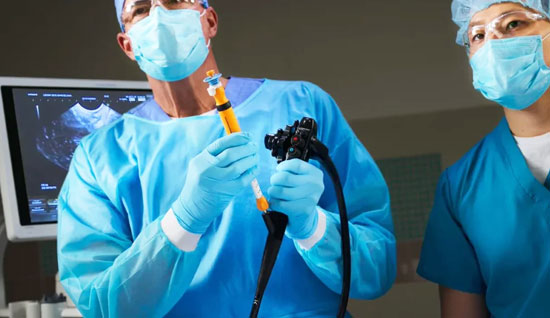
The procedure combines endoscopy with ultrasound imaging to precisely guide a thin needle into the targeted area. This allows accurate sampling from organs such as the pancreas, bile ducts, lymph nodes, or masses within the gastrointestinal tract while minimizing the need for more invasive surgical procedures.
EUS-guided tissue acquisition plays an important role in diagnosing various digestive diseases, infections, and cancers, helping doctors determine the most appropriate treatment plan.
Why EUS Guided Tissue Acquisition is Performed
This procedure may be recommended when detailed tissue evaluation is required to confirm a diagnosis.
- Evaluation of pancreatic masses or cysts
- Assessment of suspicious gastrointestinal tumors
- Investigation of enlarged lymph nodes
- Diagnosis of bile duct abnormalities
- Evaluation of submucosal lesions in the digestive tract
- Confirmation of infection or inflammation
- Staging of gastrointestinal cancers
Conditions That Can Be Diagnosed
EUS guided FNA and FNB help diagnose several conditions affecting the digestive organs and nearby tissues.
- Pancreatic tumors or cysts
- Gastrointestinal cancers
- Chronic pancreatitis
- Bile duct tumors or strictures
- Enlarged or abnormal lymph nodes
- Subepithelial lesions in the stomach or intestines
- Infections affecting internal organs
What to Expect During the Procedure
EUS guided tissue acquisition is usually performed as a day-care procedure and generally takes around 30 to 60 minutes.
- The patient is asked to fast for several hours before the procedure.
- Sedation is usually provided to ensure comfort.
- An endoscope with an ultrasound probe is passed through the mouth into the digestive tract.
- The ultrasound image helps identify the target area.
- A thin needle is guided through the endoscope to obtain tissue samples.
The collected samples are then sent to the laboratory for detailed microscopic examination to determine the nature of the condition.
Benefits of EUS Guided Tissue Acquisition
This procedure offers several advantages in diagnosing complex gastrointestinal conditions.
- Provides accurate tissue diagnosis
- Minimally invasive compared to surgical biopsy
- Helps detect cancer at an early stage
- Guides treatment planning
- Allows sampling from difficult-to-reach areas
When to Seek Medical Advice
Your doctor may recommend this procedure if imaging tests or symptoms suggest an abnormal growth or condition requiring tissue diagnosis.
- Unexplained abdominal pain
- Unexplained weight loss
- Suspicious mass detected on imaging tests
- Persistent digestive symptoms
- Evaluation of pancreatic or bile duct disorders
Early and accurate tissue diagnosis using EUS guided techniques can help ensure timely treatment and improved patient outcomes.