Best Liver specialist In Kopar Khairane
What is the liver?
The liver is a crescent-shaped organ with a nearly straight bottom edge. Its left lobe is found directly above the stomach, while its right lobe is located above the first part of the small intestine; therefore, the liver's tilt is slightly off vertical when viewed from the front. In most cases, the liver can be found in the upper right quadrant; however, when the diaphragm is pulled up towards the thoracic space it creates a concave appearance to the liver. In fact, some people may actually see their liver from the side during an endoscopy procedure. An average adult's liver will be comparable to a large avocado (the fruit) in terms of density and volume; when weighed, an average adult's liver generally weighs in excess of three pounds.
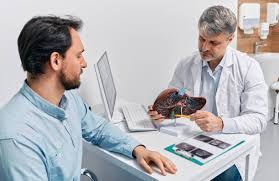
A consultation with the Best Liver Specialist in Kopar Khairane will enable a precise diagnosis, useful advice, and specialized care for preserving one's overall health when dealing with liver-related illnesses, such as fatty liver disease, hepatitis, and gastroenteritis.
What is the structure of the liver?
The liver has two main parts, or lobes. Each lobe has eight parts. Each segment has about 1,000 lobules, which are small lobes. There is a small tube (duct) in each of these lobules that goes in the same direction as the common hepatic duct. The liver gets a lot more blood than the rest of the body. At any given time, the liver holds about one pint, or 13% of the body's total blood volume. Individuals with liver issues should consult the Best Liver Specialist in Kopar Khairane for an accurate diagnosis, a professional evaluation, and optimal care for their liver health.
What is the purpose of the liver?
The liver's main job is to help the body with its metabolism. These are some of them:
- breaking down or changing parts of food, like proteins and fats
- getting energy, minerals, and vitamins
- getting rid of toxins in the blood and lessening their harmful effects on the body
Through a vein called the portal vein, the liver receives blood that contains nutrients from the digestive organs. Hepatocytes, the liver's numerous cells, take in and filter this blood.
The liver also makes between 800 and 1,000 milliliters (mL) of bile every day. This bile goes to the small intestine to help break down fats even more. When proteins break down, they release ammonia, which is a dangerous byproduct. Urea, which is found in urine, is another way that ammonia is released. People with liver problems can be sure that the Best Liver Specialist in Kopar Khairane will give them an accurate assessment, diagnosis, and good care for their liver health.
How does the liver regenerate?
The liver is an amazing organ because it can grow back. This means that the liver tissue can grow back to some extent after an injury or surgery to remove tissue.
The liver starts to heal itself by making its cells bigger. After that, new liver cells start to grow.
A 1931 study on rats found that when two-thirds of a rat's liver was taken out, the organ went back to its original weight within a week. Studies have shown that human livers can act in the same way, and other studies have confirmed these findings in rodents. The Best Liver Specialist in Kopar Khairane often talks about this interesting discovery to reassure patients that the liver can heal itself very well with the right care.
Symptoms of liver conditionsJaundice and dark urine are examples of more serious indicators of liver damage that develop from flu-like symptoms in many liver disease conditions.
Additional signs of liver issues include:
- weariness
- reduction in appetite
- nausea
- throwing up
- joint discomfort
- discomfort or pain in the stomach
- bleeding from the nose
- abnormal blood vessels (spider angiomas) on the skin
- Skin irritation
- Weakness: a lack of desire for sex
- Jaundice, or yellowing of the skin and eyes
- bewilderment and trouble thinking clearly
- swelling in the abdomen (ascites)
- Leg swelling (edema)
- impotence
- Gynecomastia (the onset of breast tissue development in males)
- Hepatomegaly, or enlarged liver
- Urine that is dark
- light-colored stools
Among the more severe symptoms are:
See your physician right away if you have any of the symptoms listed above. In order to safeguard your liver health and enhance long-term results, prompt medical attention from the Best Liver Specialist in Kopar Khairane is essential.
Frequently Asked Questions
1. Who is the best liver specialist in Kopar Khairane?
Dr Ronak Tate is a qualified and competent consultant gastroenterologist, hepatologist, and advanced endoscopist. He provides high-quality medical treatment and comprehensive, individualised treatments for people diagnosed with different types of liver and digestive disorders.
2. What conditions does a liver specialist treat?
A specialist in liver disorders treats people with many different kinds of diseases, including fatty liver disease, hepatitis, jaundice, liver cirrhosis, liver infections, alcohol-related liver disease, liver fibrosis, and abnormal liver function tests.
3. When should I consult a liver specialist?
If you have experienced symptoms that may indicate liver disorder (such as abdominal pain, yellow discolouration of your eyes or skin, bloated feeling, nausea and vomiting, lack of appetite, unexplained fatigue, bloating, swollen abdomen, and/or abnormal liver function test results), then you may want to consult with a liver specialist.
4. Can liver disease be treated without surgery?
Most liver disorders can be effectively treated without the need for surgical intervention through medication, dietary/lifestyle modifications, and ongoing monitoring when detected early.
5. Why choose Dr. Ronak Tate as a liver specialist in Kopar Khairane?
To achieve the best results for patients with liver and digestive issues, Dr. Ronak Tate combines cutting-edge medical knowledge, advanced diagnostic methods, compassionate care, and personalized treatment approaches.