Best Endoscopist Doctor in Kopar Khairane
What is an endoscopy?
An endoscopy is a way to look closely at the structures inside the body. A doctor uses an endoscope, which is a long, thin tube, to look inside your body during an endoscopy. The endoscope goes all the way to the organ or area that needs to be looked at. Most endoscopes have a light and a special camera at the end. You can take pictures or videos of organs and other parts of the body with the scope. They show up on a screen that your provider can see. Many endoscopes have special channels inside them. During an endoscopy, doctors can use tools to do surgery or take out tissue.
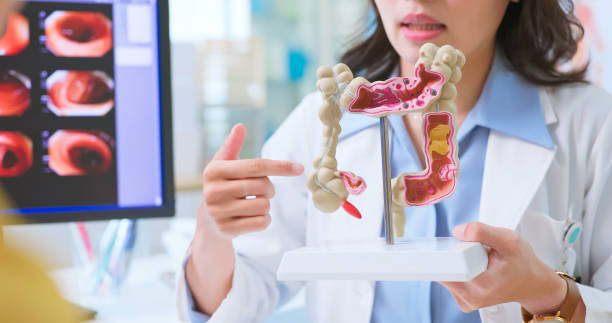
Seeing the Best Endoscopist Doctor in Kopar Khairane can help guarantee an accurate diagnosis and successful treatment utilizing cutting-edge endoscopic techniques if you are having digestive symptoms.
Endoscopy procedure
The reason for the endoscopy will have some bearing on the procedure.
An endoscopy is performed for three primary reasons:
- Investigation: An endoscope can be used by a medical practitioner to look for the cause of symptoms such as vomiting, abdominal pain, breathing problems, stomach ulcers, difficulty swallowing, or gastrointestinal bleeding.
- Verification of a diagnosis: To confirm a diagnosis of cancer or other illnesses, a medical practitioner may perform a biopsy during an endoscopy.
- Treatment: An endoscope can directly treat a disease; for example, it can be used to remove a polyp or cauterize (seal using heat) a bleeding vessel.
A doctor may sometimes do an endoscopy along with another test, like an ultrasound scan. The endoscope can help you get the ultrasound probe close to organs like the pancreas that are hard to see.
Some modern endoscopes come with sensitive lights that use narrow-band imaging. This kind of imaging uses certain blue and green wavelengths to help the doctor find precancerous conditions more easily.
An endoscopy is usually performed by a medical practitioner while the patient is conscious, though occasionally a local anesthetic (usually an anesthetic spray to the back of the throat) is administered. A sedative is frequently given by a medical practitioner.
Under the guidance of the Best Endoscopist Doctor in Kopar Khairane, a mouth guard will shield the teeth and lips during endoscopy procedures that require entry through the mouth, guaranteeing comfort and safety.
Risks and side effects of endoscopy
An endoscopy is a reasonably safe procedure. There are some risks, though. The area that a medical professional is examining determines the risks.
Endoscopy risks could include:
- excessive sedation, even though it's not always required
- experiencing temporary bloating following the procedure
- slight cramping
- a few hours of numbness in the throat from the local anesthetic
- infection of the study area, which typically happens when other procedures are performed concurrently (the infections are typically minor and treatable with a course of antibiotics).
- enduring discomfort in the endoscopy site
- A rare but dangerous consequence is a rupture or perforation of the stomach or esophageal lining.
- internal bleeding, which is typically mild and occasionally curable with endoscopic cauterization
- The Best Endoscopist Doctor in Kopar Khairane can efficiently manage preexisting condition-related complications with prompt evaluation.
- stool with a dark hue
- breathing difficulties
- severe and ongoing stomach discomfort
- Pain in the chest
- throwing up blood
- fever
Any of the following symptoms should be reported to a physician:
Recovering from an endoscopy
A detailed medical evaluation helps identify the cause and severity of acid reflux. Depending on the symptoms, diagnostic tests may include:
How well you recover will depend on the type of procedure you had. After an upper endoscopy, which lets a doctor look at the upper gastrointestinal tract, the patient will be watched. This usually lasts for about an hour, which is how long it takes for any sedative to wear off.
The person should usually not drive or work for the rest of the day because the medicine they took to stop the pain makes them sleepy. You should tell your doctor about any cognitive effects you have before or after the procedure.
You might feel some pain. This type of endoscopy can cause bloating and sore throats, among other things. But with the right care from the Best Endoscopist Doctor in Kopar Khairane, these usually go away quickly, making it easier and safer for patients to get better.